

Case Studies

Cala Homes
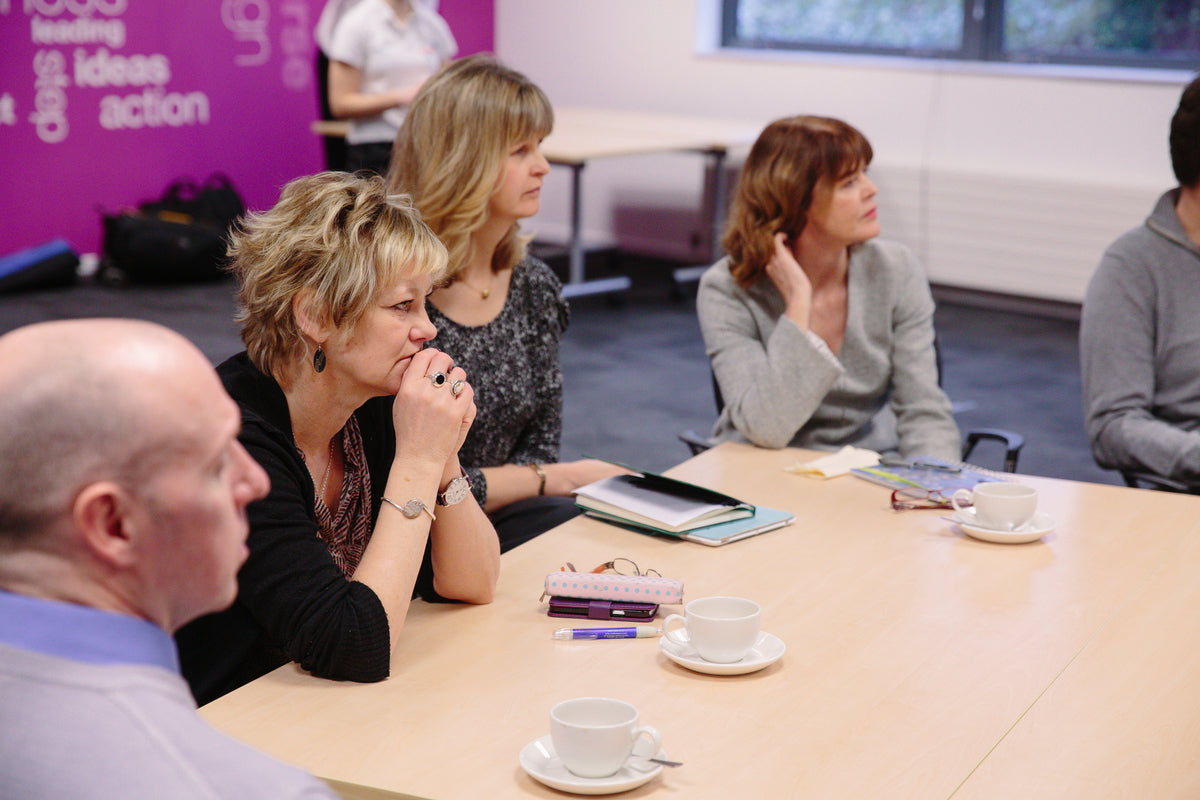
Cala Homes, the UK’s Housebuilder of the Year in 2012, celebrated record success and growth in 2013. Significant recent investment and expansion allowed the company to create ambitious but achievable growth plans and, as part of their drive to create an innovative and forward looking culture they asked RSVP Design to support a new type of annual staff conference. The desire was for an interactive event, to replace the traditional ‘information briefing’ that had been organised in previous years. The briefing took place on separate days in two locations for the staff based in England and in Scotland, with the larger Scottish event being attended by almost 200 people. The theme that was identified was ‘thinking differently’. Built into this were three key messages: look for small innovations that move things forward in a positive and productive way explore ways of improving performance by seeking new solutions to old problems work across teams and perceived boundaries to share information and organisational learning. RSVP Design integrated three table top activities into the design of the day, ensuring that the key messages from speakers in the senior management team were illustrated in practice during the activities. The day opened with every participant taking part in a simple and entertaining practical task in which pairs of people were connected by rope links and challenged to find a way of freeing themselves within the rules of the activity - harder than it sounds! As pairs found correct solutions, the learning was passed around the room until everyone had completed the task successfully. This was a lively opening to the day, raised energy levels and illustrated the importance of sharing learning in order to achieve organisational success. A second activity, ‘Seeing the Point’, further illustrated how individuals and teams can limit their thinking by looking for obvious solutions and how, with some creativity and a willingness to experiment, can achieve ‘more with less’. The final exercise, RSVP Design’s Simbols exercise, became a competitive challenge as 9 teams aimed to problem-solve and organise the implementation of their solutions against the clock. A degree of enjoyable but productive chaos ensued and a number of the teams proved that even in difficult environments, good communication, teamwork and a carefully developed and well-organised strategy will deliver success. The feedback from the event was that it was engaging, motivational and coherent and that the activities reinforced the positive messages that ran through the business content of the rest of the day. Further Information To learn more about how we can help you to integrate or facilitate powerful, experiential learning activities in your training, please contact sales@rsvpdesign.co.uk or call +44 141 561 0387
Read more
The World Business Council for Sustainable Development (WBCSD)
The World Business Council for Sustainable Development (WBCSD) The World Business Council for Sustainable Development (WBCSD) is a CEO-led organization of forward-thinking companies that galvanizes the global business community to create a sustainable future for business, society and the environment. Through its members, the Council applies its respected thought leadership and effective advocacy to generate constructive solutions and take shared action to drive business action on sustainability in the coming decade and beyond. The WBCSD aims to be the leading voice of business that will support companies in scaling up true value-added business solutions and in creating the conditions where more sustainable companies will succeed and be recognised. Members work together across sectors, geographies and value chains to explore, develop and scale up business solutions to address the world's most pressing sustainability challenges. Through work to change the rules of the game and drive measurable impact, WBCSD is emerging as the leading and most compelling sustainable development business voice with multilateral institutions such as the United Nations, World Bank, UNFCCC, as well as with global platforms like the UN Climate Summit and COP negotiations. Leaders of the Future Tomorrow's business leaders need the skills and competencies to cope with an increasingly complex world as well as the social and environmental challenges across a changing competitive landscape. A sustainability perspective is critical to managing relationships, bringing about change and planning for the future. The WBCSD's Future Leaders Team (FLT) program is a unique professional and leadership development opportunity that aims to mold leaders for the future who understand sustainability challenges and can position these to make strategic decisions. The program is designed to help upcoming business leaders grapple with the complex topics, issues and concepts that will influence their future, as well as the future of their organizations. The program creates a global network of dynamic business leaders, capable of acting as sustainable development ambassadors both within their companies and in society. RSVP Design's Involvement in the Future Leaders Program RSVP Design were invited to make a significant contribution to the 2014 FLP. Our learning design specialists, led by Dr. Geoff Cox, worked in partnership with WBCSD and academic staff from the University of Cambridge, to create the first residential module of the international 9-month program, for approximately 30 Future Leaders. The module was structured in a way that: Introduced the participants to each other and created expectations about learning in a collaborative, supportive, diverse and respectful culture Built teams of people who would continue to work together on a range of real projects, around the world, during the program Established a common language and vocabulary with which to explore multiple aspects of the Sustainability Agenda, with a theme of 'Bridging the Capitals' Introduced key concepts around innovation, change and leadership for the future Raised awareness of the attitudes, skills and behaviors needed to be be future 'thought leaders' and influencers of people in their own organizations and beyond. The integration of RSVP Design's resources and skills Our objective was to raise awareness of, and create commitment to, a sustainable leadership culture which: Values decisions made for long term benefit rather than short term gain Is self-sustaining: leaders develop other leaders and a key success measure is the extent to which the next generation of leaders is empowered Sets out a clear vision of the future and engages employees through encouraging commitment and conviction Recognises that leadership can be exerted and applied from anywhere in an organisation Identifies potential for more sustainable practice and builds commitment to implementation (based upon the simple, visual, HBDI model) The structure of the program meant that we integrated a range of RSVP Design learning activities and processes into 2 days, weaving them through the academic content, linking them to WBCSD's presentations and using them to illustrate a range of attitudes, behaviors and beliefs within the group. The RSVP Design content 1. An introduction to different types of thinking, based upon the Whole Brain Thinking model of Ned Herrmann. This was linked to the Transformational Leadership activities identified in the CEO Study on Sustainability and provided an opportunity to reflect on the nature of leadership thinking. It also allowed the learners to reflect upon their personal thinking style preferences and the impact that these have upon their own leadership choices. 2. Introductory activity: Colourblind® a team exercise in achieving common meaning through the use of verbal communication. This allowed the participants to become more aware of how the different types of thinking translate into behavior, and the impact of this behavior on the task and other people. 3. Inter-group exercise: T-Trade. This exercise, which involves negotiation between groups, was used to highlight some key aspects of achieving sustainability: the balance between short/long term gains, the establishment of success measures other than financial ones, the importance of collaboration and partnership working. 4. Change Management activity: Challenging Assumptions, leading into a short session on the use of questions in innovation and change management, and a basic introduction to coaching as a tool for gaining commitment from individuals to a development agenda. 5. A practical leadership simulation: Top Priority. An extended, more complex task which requires overall and sub-group leadership: a simulated organization in which participants can apply and experience leadership in a more authentic context. 6. An extended debrief of the leadership exercise and a re-visiting of the Whole Brain Thinking model to identify where individuals can develop and extend their personal leadership practice in the remainder of the program, in relation to themes from sustainable leadership: Realism and context: Understanding the scale of the challenge and the opportunity Growth and differentiation: Turning sustainability to advantage and value creation Value and Performance: What gets measured gets managed Technology and innovation: New models for success Partnerships and collaboration: New challenges, new solutions Engagement and dialogue: broadening the conversation Advocacy and leadership: Shaping future systems RSVP Design's Training of Facilitators The 2014 FLP was so successful, numbers increased significantly for 2015. That year, WBCSD's own facilitators and sustainability experts facilitated the introductory module themselves, in the USA in association with Yale University. To support and prepare them, Ann Alder from RSVP Design worked with the facilitators over two days, to extend their understanding of the learning design process, the activities involved and the methods for facilitating the activity reviews to ensure that the desired learning is achieved. During this training, the WBCSD facilitators facilitated the activity sessions with a group of their own colleagues, with mentoring from Ann, to ensure they felt completely confident in taking over the role for 2015. This process is a live example of our commitment to sustainability and capacity-building: the transfer of our expertise into the client organization where it can be developed and handed on to others in future. Feedback and testimonials from FLP participants "I think it is great! Diversity and competence were the basis of constructive discussions on sustainability between people from all over the world, working in different functions and sectors. The opportunities to discuss, share best practices, doubts and ideas really have developed each of us. We achieved so much in a short period of time, both from a learning point of view and also from a team-building perspective. In my opinion, the decision to involve people who do not normally work on sustainability was useful and brought the sharing of external and critical points of view." "For the people engaged in the program, it's an amazing and fun way to develop leadership skills and to build knowledge on specific dimensions of sustainability." "In addition to the technical knowledge I gained, we spent a substantial amount of time throughout the program on core skills such as leadership, networking, team, project, and time management. When I look back at my experience with the FLT program, I am mostly proud that at the end of the program I came to know and befriend 28 other amazing individuals from all around the world." Further Information To learn more about how we can help you to integrate or facilitate powerful, experiential learning activities in your training, please contact sales@rsvpdesign.co.uk or call +44 141 561 0387
Read more
BAE SYSTEMS: Surface Fleet Supervisors
This division of BAE Systems builds naval ships to supply MOD contracts. Several years ago they needed to train approximately 100 of their operational supervisors in supervisory leadership skills. Formal, accredited training with classroom style teaching and theoretical assignments had proved a disaster: the inappropriate learning style and the lack of content relevance to the supervisors had created a high drop-out rate and de-valued all training in the eyes of the participants. RSVP Design were commissioned to re-design the programme and to deliver a modular, 5-day programme to all new and recently appointed supervisors. This resulted in the delivery of 20 days of training (4 x intakes, each undertaking a 5-day modular programme over 2 months) and this programme continued into the future as new supervisors were recruited. Key elements of this programme are: A simple, pre-programme personal and line-manager assessment of confidence and competence against carefully selected and relevant competences, to give a ‘benchmark’ of starting performance Trainers spending a full day shadowing a participant to get a sense of the reality of the working environment and issues A highly practical and coherent workshop design, in which learners built skills in a step-by-step process, using activity based (experiential) learning that made no real demands upon ‘academic’ ability but recognised practical contribution, common sense, sensitivity and awareness of inter-personal issues and the need to change behaviour to accommodate different situations Flexibility on the part of the trainer to deal with issues of real concern …”So what do I do when this happens?” The creation of personal, individual action plans for continuation beyond the programme Follow-up interviews and observation by line managers, supported by HR specialists in the company. An initial needs assessment and observation of the first cohort in action identified the following key factors in the programme design. The supervisors needed an activity-based programme. The participants both enjoy and remember the learning derived from the activities. The process of activity, review and introduction of ‘comparative’ theory matches the learning style of the majority. The supervisors had, in general, a very low level of self-awareness and found it difficult to reflect on their own behaviour and preferences. The standard of observation and listening was not very high. They needed time and coaching to begin to notice the effects of their own, and other people’s, behaviour. There was a relatively low level of confidence in tackling new or unfamiliar problems. Technical problem solving (‘fixing’) was good: the ability to see a bigger picture and grasp the implications of the wider problem was more of a challenge. This translated into dealing with ‘people problems’ in which the impact of their choice of behaviour was difficult for them to assess, for example in dealing with conflict. Bearing these things in mind, we created a five-module programme. We saw the need to ‘lead’ the supervisors through a coherent and developmental process, allowing them opportunities to build upon their skills and to have multiple opportunities to practise new skills. Our structure Day 1: Induction. Emphasis on learning styles, the role of the supervisor, expectations of the leadership role. Introductory team work projects. Day 2: Basic teamworking skills. Working on a series of team tasks to explore issues around the achievement of tasks when working under constraints of time and resources. Basic task management, planning, problem-solving, some introductory time-management and delegation Day 3: Achieving results through others: a strong focus on communication skills as they supervise more complex, multi-task activities. Some introductory work around motivation and delegation in order to achieve high quality results through the management of people. Focus on observation and listening skills Day 4: Dealing with ‘difficult situations’: using influencing skills, motivational and conflict management skills to deal with situations which become more complex. This included negotiation skills, to address conflicts over resources, performance issues and inter-personal tensions. Day 5: Achieving excellence. Process and performance improvement, prioritisation, problem-solving. Influencing upwards, Self-development. Working with the supervisors to create an environment that supports learning. A practical opportunity to put into practice skills developed in other parts of the programme along with those from the previous modules. Outcomes Feedback from the programme was been universally and consistently positive. Line managers reported observable behavioural change. Approximately 80% of the supervisors completed all elements of the programme, including technical, IT, HR and Stress Management training conducted by other providers and received company certification. Those who did not complete had largely been limited by illness or other work demands: and planned to finish the programme with later cohorts. The Supervisor Improvement programme won the BAE Systems Chairman’s Bronze award in 2008. The Chairman’s Awards scheme recognises employees and industry partners for outstanding, new and innovative ways in which they shape BAE Systems and contribute towards its global success. Further Information To learn more about how we can help you to integrate or facilitate powerful, experiential learning activities in your training, please contact sales@rsvpdesign.co.uk or call +44 141 561 0387
Read more