

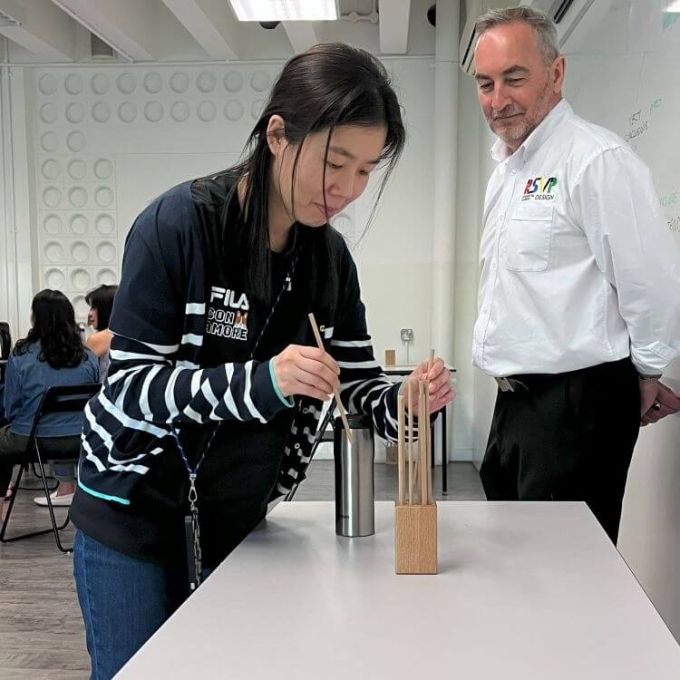
Collaboration comes easy for some people, they just seem to be comfortable in sharing time and ideas with other people, committing to the process and believing that the end product will be somehow better. For others the whole idea is uncomfortable, viewing it as an unstructured mess that leads to sub-standard outcomes and risking an erosion of personal expertise and power. These are extreme positions, but if we're tasked with delivering a collaboration-skills initiative across a diverse population, the extremes need to be encompassed in whatever experiential content we programme. The easy-collaborators might be happy with a more ad-hoc approach, yet it won't do them any harm to think about the process in a more structured way, a way that may go some way to reassuring the reluctant-collaborators.
The success of a structured collaboration depends largely on three elements:
-
A shared, agreed and well-defined common goal.
-
Each person having a contribution to make.
-
A disciplined process that allows each individual to make their contribution.
An activity such as Simbols is well able to deliver this agenda. The basis of the activity design is what we call distributed cognition i.e. each individual has a unique part of the solution and the solution will only be achieved if each individual makes their contribution. The facilitator needs to either offer, in advance, the three points above as a checklist for the group, or not offer them any guidance but review Simbols against the three points, then allow the group to move on to a second activity with the results of the review in their minds. The former approach may work best where there is a wide range of attitudes to the idea of collaboration, the latter approach where there is a more tolerant atmosphere. If you want a follow-up activity when working at an individual learning level then Colourblind or Team Fusion might be what you need as they offer a rapid check that the learning from Simbols is being transferred.
Where the individual collaboration skills needed in a population are more creative, or there is more ambiguity in their working environment, an activity that has less definition may be more appropriate. Challenging Assumptions takes very little time to deliver (many of our customers use it as an icebreaker) but it offers an inordinate amount of learning. It sits at a place where small groups of two or three individuals might be committed to collaborating, but the sheer ambiguity of what they are trying to achieve gets in the way of being effective in this aim. We often see high levels of tolerance needing to be applied as individuals strive to agree on a way of working they can all buy into. There is also good learning available here about being willing to look for ideas elsewhere, outside your working group, rather than being overly-determined to find your own 'made here' solution.
A final suggestion for an experiential tool that can be utilised as part of an initiative designed to develop individual collaboration skills is very different to the ones I've suggested above. Images of Organisation or Images of Customer Experience are card based activities that work by offering people a focus question and then asking them to choose an image from the deck that they think best answers the question. In this case it might be a question along the lines of "Choose a card that best describes what gets in the way of you collaborating with the rest of your colleagues"; individuals then share their images and describe why they've chosen them. The outcomes of this are that people begin to recognise that collaboration is a multi-directional process, and that they may need to consider some changes in their own behaviour or working practices if they want more of it.


