

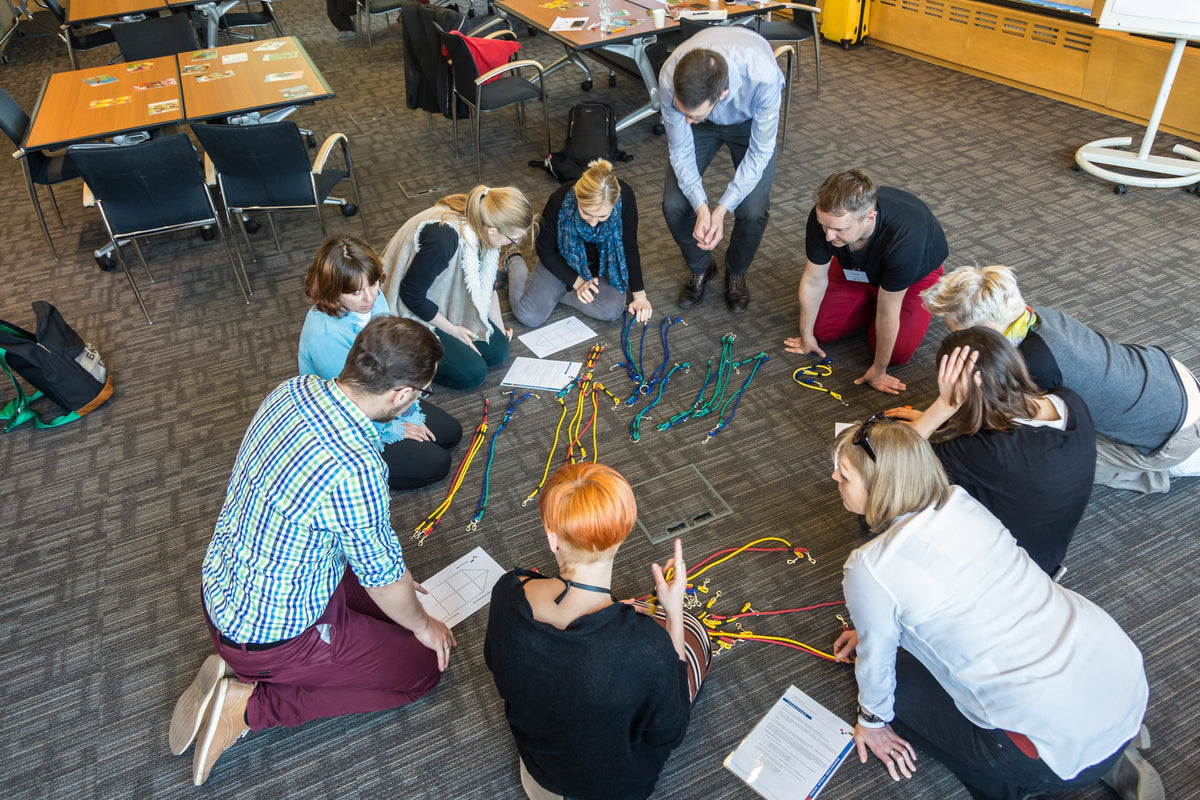
I wrote in the first article in this series about conducting a ranking exercise that would offer us a way into choosing the right experiential tools to address a perceived need to build resilience in a particular team. This first follow-on article assumes that setting goals and expectations has been seen as being important to their resilience - perhaps people are poor at doing this for themselves, or there's poor communication in this area so goals and expectations are ambiguous, or that the pace of change means that it's hard for people to keep pace? Whatever the cause we can explore workplace goals and expectations experientially in the security of the learning environment, then relate learning back to suggest changes that would build a more resilient workplace.
If we feel that a good place to start is to acknowledge that people in the team are poor at setting goals and expectations for themselves, we may use an activity that doesn't set performance targets for the team, rather it demands that the team do this for themselves. You could think about the target being about time, or scoring, or standards, just about any activity where a key feature is taking time up-front to define the target, and then performing to achieve this. The subsequent review should look at this process - who contributed and how, how was the final decision about a target made, did everybody agree with the decision, did the team keep the target up-front and visible, and ultimately was it a good process and a good decision? The outcomes of this discussion can then be related back to work and how the target setting and expectation management is conducted there.
There are some RSVP Design tools which have target setting as an integral part of the activity, or the suggested targets are easily discarded in favour of asking the team to set their own. Sequencer and Webmaster both have 'time-trial' conclusions where the participants follow planning and rehearsal time with an attempted assembly against the clock - try asking the team how fast they think they can achieve. If you think that the jeopardy of a 'one attempt only' scenario will motivate the team then a possible alternative is Simbols (or on a larger scale and suitable for conference settings SuperSimbols). Any of these activities will allow for the review I've suggested as the target that the team set for themselves will have real consequences for their chances of success and the pressure they put on themselves.
Where the comprehensive facilitators notes that come with every RSVP Design activity do not overtly set targets for the participants it's always possible to introduce this more casually during the briefing stage. I've done this successfully with Simmetrics as a question before the group start, then as a revised target once they realise how challenging an activity it is. Use your imagination to make the activity work to your needs - remember that it's the conversation that defines the target that is more important in learning terms than the target itself.
Look out for part 3 on Creating a supportive team environment.


