

In the first article of this series I looked at what an experiential approach to developing collaboration might look like where the need is to build collaboration skills in individuals. Where the desired learning outcomes relate more about getting functional teams to collaborate e.g. R+D with Sales, the need is more specific and probably requires a different approach, although an initial exposure to one of the activities in the previous article, for example Simbols, may well be a good way to open this conversation.
Effective collaboration between functional teams is almost entirely predicated on them achieving particular outcomes. For example, a new campaign or a different internal systems approach: and this clearly defined outcome needs to be a feature of the experiential tool that is selected. So we're looking for an activity that culminates in achieving, or not achieving, a performance target, and this outcome requiring contribution from each team to make it happen. Incidentally there's a decision to be made about whether you set up the activity with intact workplace teams, or mix them so that they build interpersonal insight across team boundaries as part of the action.
Learning Squared fits these criteria for choosing an activity - making a clear differentiation between a planning team and an assembly team who share responsibility for a single outcome. It's an exercise that works well in exploring the communication aspect of inter-team working, being particularly relevant to a workplace situation where the teams in the workplace do not usually have face-to-face contact, but rely on more remote communication.
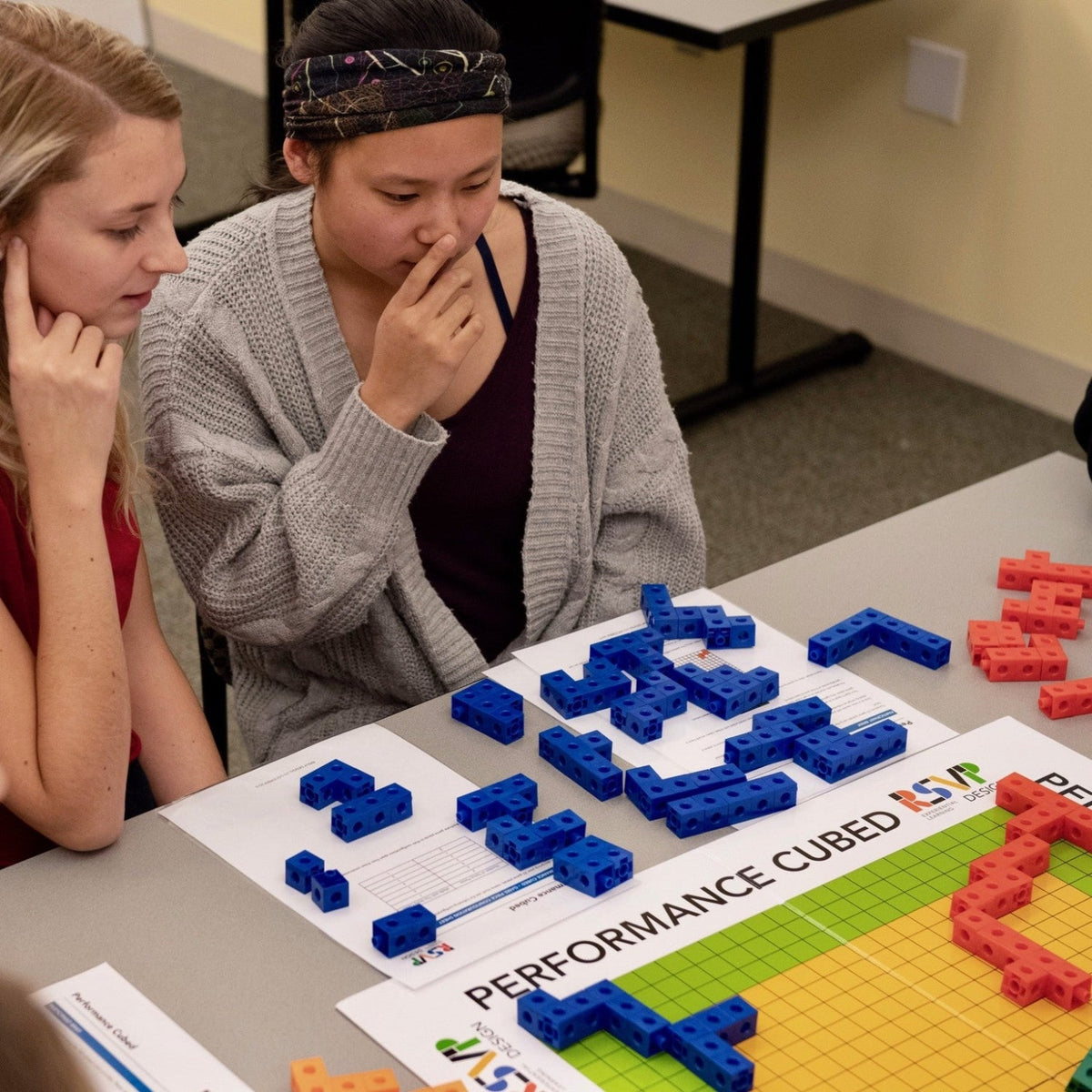
Performance Cubed is an interesting activity in that in the middle of the action the emphasis shifts from measuring team performance to measuring whole organisation performance. This shift demands different decision making and different tactics, which in turn demand a substantially different quality of communication between the teams. As a facilitator this shift provides excellent review material in that if we examine behaviours before the shift, and compare them to behaviours after the shift, we should see some distinct differences. Applying these behavioural insights back into the workplace we can ask telling questions such as "Which of these patterns of behaviour are currently prevalent across the teams?" and "Which of them would best support increased collaboration between the teams back at work?". Answers to those questions should offer a brilliant platform for action planning and learning transfer.
Finally Webmaster is an activity that gets people out of their seats and moving around, so it's perfect for mixing teams to build mutual awareness. Depending on team size you can work in two or three units. An added dimension of using Webmaster is that it opens up conversation on team culture, and how this can facilitate or act against cross team collaboration. The dynamic that sets this up is that teams initially operate independently to build their expertise on a task level, simultaneously building a team working identity. The next phase of the activity demands that the teams collaborate, so they have to be flexible in their ways of working if they are to collectively achieve success. Reviewing performance across the different phases of the activity is a great way of looking at team integration / collaboration, what makes it work and what are the potential stumbling blocks.


